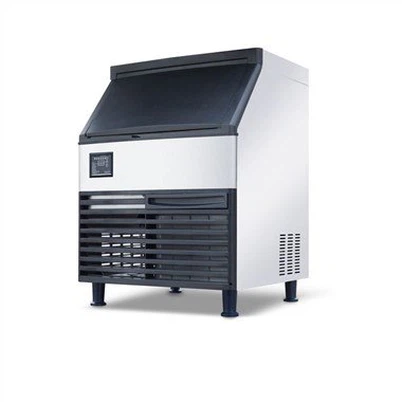
The Internal Structure And Application Range Of The Flake Ice Machine
Leave a message
The flake ice machine consumes less power than other ice machines. It is widely used in food processing, meat and poultry preservation, and fresh food in supermarkets. It is the most widely used ice machine. The following is about the structure and use of the flake ice machine.
The structure of flake ice machine:
1. The evaporator is the place where ice flakes are formed. The refrigerant in the refrigeration system passes through the inner wall of the evaporator, stops heat exchange with the water, absorbs a large amount of heat, and rapidly cools the water flowing through the inner wall of the evaporator to a temperature below the freezing point. , Instantly freezes.
2. The water supply cycle installation includes water tanks, water pumps, water supply pipelines, water distribution trays, and diversion tanks. The specific flow path of water is: the water flow from the external water source enters the water tank, and there is a float valve in the water tank to control the water level in the water tank. If there is too much water in the water tank, it will be discharged from the overflow port, so be sure to connect the drain pipe at the overflow port Lead to the water system; the water pump leads the water from the water tank to the upper part of the ice machine unit, and from the upper water supply opening, the water is injected into the water pan, and the water pan evenly sprinkles the water on the inner wall of the evaporator; the part The water freezes, and the unfrozen water falls into the water receiving tray along the inner wall of the evaporating barrel, moves along the diversion groove, and flows into the water tank for recirculation.
3. The low-speed rotation of the spindle is driven by a motor with a reducer.
4. The ice scraping blade is fixed by the bracket protruding from the upper and lower ends of the main shaft. There are two types of blades, one is a spiral blade and the other is a rake blade. The structure of the corresponding ice machine is different.
5. The blade cuts layers along the inner wall of the evaporator, and peels off the ice that has reached a certain thickness from the inner wall to form flake ice with a certain uniform shape.
The usefulness of flake ice machine:
Flake ice machines have been widely used in aquatic products, food, supermarkets, dairy products, medicine, chemistry, vegetable preservation and transportation, marine fishing and other industries. With the development of society and the continuous improvement of people's consumption level, the industries using ice are becoming more and more extensive. The quality requirements for ice are getting higher and higher. The requirements for "high performance", "low failure rate" and "hygiene" of ice machines are becoming more and more urgent.
1. Application in aquatic product processing: flake ice can reduce the temperature of processing medium, cleaning water, and aquatic products, prevent bacterial growth, and keep aquatic products fresh during processing.
2. Application in the processing of meat products: mixing flake ice that meets hygienic standards into meat and stirring. In order to achieve the purpose of cooling and keeping fresh.
3. Application in food processing: For example, when stirring or second creaming in bread consumption, use flake ice to quickly cool down to avoid fermentation.
4. Application in supermarkets and aquatic product markets: for the freshness preservation of aquatic products such as placement, display, and packaging
5. Application in vegetable processing: flake ice is used in the harvesting and processing of agricultural products and vegetables to reduce the metabolism of agricultural products and the growth rate of bacteria. Extend the shelf life of agricultural products and vegetables.
6. Application in the long-distance transportation process: It is more and more common to use flake ice to cool down and keep fresh in long-distance transportation for products that require cooling and freshness, such as ocean fishing and vegetable transportation.
7. It is also widely used in laboratories, pharmaceuticals, chemicals, artificial ski resorts and other industries.