


Why Choose Us
Our Product
Commercial ice maker\portable ice makers\automatic ice maker\gourmet ice maker\ice maker
24H Online Service
We try and respond to all concerns within 24 hours and our teams are always at your disposal in case of any emergencies.
Our Service
We respect your feedback after you received the goods. We provide 3-year warranty for core components and 12-month warranty
for the whole unit. We will respond to your complaint within 24 hours.
Our Advantages
With the optimized one-stop manufacturing service team and the spirit of paying attention to detail, we have achieved a unique service quality and ensured the continuous improvement of user satisfaction.
What is Commercial Ice Maker
Commercial ice machines are refrigeration machinery that cools water through an evaporator and generates ice through the refrigerant in the refrigeration system. The shapes of the ice generated are different depending on the evaporator and the principle of the generation process. People generally classify ice machines into cube ice machines, flake ice machines, plate ice machines, tube ice machines, shell ice machines, etc. according to the shape of the ice.


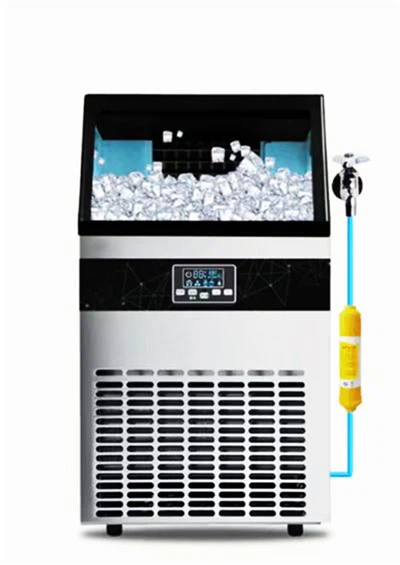
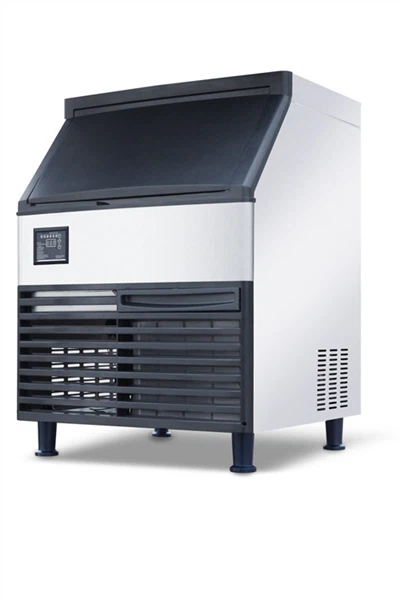
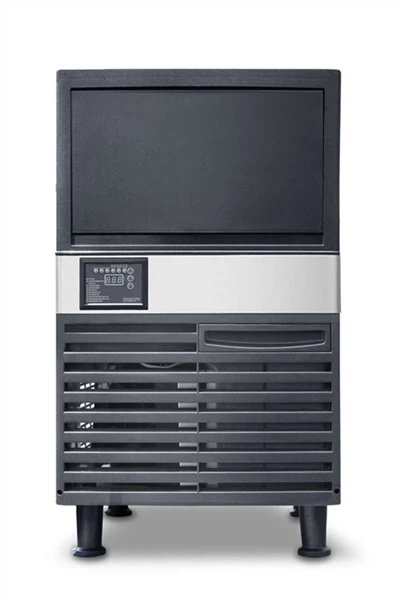
1. The ice produced is in block form.
2. High hardness of ice, freezing point up to -20 ℃ below, crystal clear ice, not easy to melt, cooling speed.
3. Ice full display, water shortage display, overcooling protection display, fault warning display and other protective shutdown functions.
4. The process of making ice adopts full computer program control, imported computer chip, reliable control, smooth operation.
5. Unique water tank float type water inlet system, to ensure that no residual water, water and electricity.
6. High quality stainless steel shell, corrosion resistance and durability, independent one-piece structure, compact and simple, space-saving.
7. Commercial ice maker reliable quality, stable performance, low noise, stable and reliable operation, high ice hardness, low temperature.
Types of Commercial Ice Makers
Modular ice makers produce large amounts of ice and are paired with separate units to dispense the ice. Modular ice machines are commonly available in 22", 30", and 48" widths and sit on top of and supply ice to an ice machine bin, an ice dispenser, or a soda dispenser.
• Modular Ice Machine Output: Ice outputs range from 250 lb. per day to well over 1000 lb. per day
• Ice Types: All ice types
An integral piece of equipment in any bar, undercounter ice makers fit underneath countertops and are out of the way of foot traffic. They combine the ice machine with a storage bin and fit under most 40" high counters. An undercounter ice machine will meet the output needs of small bars, cafes, and restaurants.
• Undercounter Ice Machine Output: Ice outputs generally top out at about 350 lb. per day, though a few higher capacity models exist.
• Ice Types: All ice types
Typically paired with a modular ice machine, a commercial ice dispenser is similar to an ice bin in that it holds ice until use, but it eliminates human contact with the ice supply by using a sensor or lever dispenser system. Ice dispensers are commonly used in hotels and healthcare settings because they can be used for self-service applications and keeps ice safe and free of contaminants. These units come in both floor and countertop models and are generally only available with an air cooled ice machine.
• Ice Dispenser Output: Ice outputs range from 120 lb. per day to 618 lb. per day
• Ice Types: Full cube, half cube, and nugget
Able to dispense both water and ice, commercial ice and water dispensers are great for offices, cafeterias, break rooms, and healthcare facilities. Since many combination units are used for self-service, they are designed to be space-saving, easy to use, and easy to clean. They come in countertop and floor models and usually dispense nugget-style ice.
• Combination Ice and Water Dispenser Output: Despite many having a small ice storage bin, they can still produce up to 500 lb. of ice per day.
• Ice Types: Nugget, full cube, crescent, cubelet
What Factors Can Affect Commercial Ice Maker Output?
Ventilation/Air Temperature
Especially for air cooled units, the amount of ventilation and the air temperature can dramatically affect ice output. Poor ventilation can create high ambient temperatures, and installing the ice machine in a hot kitchen can make the unit work harder. To ensure it produces ice at its optimum level, carefully read the ventilation and air temperature requirements in your unit's manual.
Water Temperature
Verify that the potable water (the water that turns into ice) you supply to your ice machine is at the proper temperature. If the water is too warm, the machine will work harder and take longer to make ice. Additionally, if you use a water cooled ice machine, check that the cooling water is also at the proper temperature.


Water Quality
Hard water can leave mineral deposits on internal components and in water lines, which slows down the flow of water in your ice machine. This will affect how quickly and efficiently your ice machine can work. To avoid this issue, use a water filter to reduce the buildup of mineral deposits within the unit and keep your ice tasting great
Cleanliness
It is important to regularly clean your ice machine to ensure it stays at optimum output. Buildup on internal components can block water flow and obscure sensors, which slows down production and causes poor-quality ice.
Commercial Ice Machine Installation
Space and Ventilation
Make sure you have enough space for the machine, bin, and filter. Adequate air flow is crucial for maximum ice production, so installing an ice machine in a storage room or closet is not recommended. A well-placed ice machine can increase worker productivity and efficiency, but even the best commercial ice maker in a poor location can cost you more in labor and utilities.
Water Supply and Floor Drain
Your ice machine will need a cold water supply with a shutoff valve. It will need a floor drain, too. Check your local codes for specific drain types and placement requirements.
Power Supply
Many ice machines do not include a cord and plug and must be hardwired by a professional. Be aware of the machine's power requirements before purchasing - not all ice makers operate on a standard 110V electrical supply. Electrical requirements and any other special installation considerations can be found in the machine's manual.
Operating Steps of Commercial Ice Machine
Preparation
Check whether the condenser and evaporator are clean and whether the oil level of the compressor is normal.
Turn on the power
Insert the plug of the commercial ice maker into the power outlet and press the power switch.
Start condensing fan
Press the start button of the condensing fan to make the condensing fan start working.
Start the compressor
Press the start button of the compressor to start the compressor.
Adjust the temperature
Adjust the temperature of the ice maker according to your needs. Normally, the working temperature of the ice maker is between -15 and -20.
Ice making
After the ice maker starts to work, after the ice maker has worked for a period of time (usually ranging from a few minutes to several minutes), the ice maker will start to make ice, and after the ice maker finishes making ice, you can use the ice cutter to cut the ice into the required size and shape.
Cleaning and maintenance
After using the commercial ice machine for a period of time, you need to clean and maintain it, the cleaning process needs to pay attention to avoid the use of acidic or alkaline cleaning fluid, to avoid damage to the internal metal parts of the ice machine.
1. While using the commercial ice machine, you need to constantly check its working condition to ensure its normal operation.
2. In the operation process, you need to follow the manual of the ice machine and operate it according to the specified procedures.
3. Before using the commercial ice machine, you need to check and maintain it to ensure that its internal parts and liquids are in a normal state.
4. Prohibit the use of unqualified cords, plugs and other electrical accessories to connect the commercial ice machine.
5. When cleaning and maintaining the commercial ice machine, you need to disconnect it first and ensure that its internal electrical components are in a state of power failure.

Working Principle of Commercial Ice Maker
Commercial ice machine consists of compressor, condenser, expansion valve, evaporator and other components. The principle of ice making is that the compressor compresses the refrigerant into a high-temperature and high-pressure gas, and then the condenser allows the refrigerant to emit heat and turn into a high-pressure liquid refrigerant. Next, the expansion valve makes the high-pressure refrigerant into low-pressure refrigerant, which flows through the evaporator and absorbs the heat of the surrounding medium and becomes gaseous refrigerant. Finally, the low-temperature and low-pressure refrigerant passes through the compressor to become high-temperature and high-pressure gas again, and the cycle repeats itself for ice making.
Ice Machine Condenser Types
Using air to transfer internal heat out of the rear or sides of the unit, air-cooled ice machines are the most common condenser type used in commercial kitchens. They are also more cost-effective and energy-efficient than water cooled machines, as they do not involve additional water costs, and many air cooled units even achieve Energy Star compliance.
Because air cooled ice machines intake and discharge air, they are best for use in clean, temperature-controlled settings with at least 6" of clearance around the air intake and discharge areas. If the setting is too hot, too prone to airborne contaminants, or has inadequate ventilation, it can overwork the machine and reduce its efficiency and lifespan.
Featuring water coils that run along the condenser coils to transfer internal heat out of the unit, water cooled ice machines are a better choice than air cooled models only if one or more of the following conditions exists:
• The machine would be installed where ambient air temperatures are greater than 80 degrees Fahrenheit
• The machine would be installed in an area where the air contains a high level of contaminants, like grease
• The machine would be installed where there is not enough clearance for an air cooled machine
Water consumption will be much higher than with an air cooled ice machine. In fact, some municipalities do not even allow businesses to use a water cooled ice machine for that reason.
With remote condenser ice machines, the condenser is air cooled but mounted in a separate location from the ice maker itself. The condenser is usually placed outdoors on a roof and refrigerant lines run between the condenser and the machine. The greatest benefits of using a remote ice machine include removing the heat and noise of the condensing unit from the kitchen or service area. As a result, a remote condensing ice machine will be much quieter and cooler than its air or water cooled counterparts
It's important to keep in mind that installation and maintenance of a remote setup can be much more costly than other types, and most operators only choose a remote condenser ice machine if conditions prohibit the use of an air cooled or water cooled unit.
The Use of Commercial Ice Machine Skills
1. Commercial ice machine should be installed away from heat sources, no direct sunlight, well-ventilated place, the ambient temperature should not exceed 35 ℃, in order to prevent the ambient temperature is too high to cause the condenser heat dissipation, affecting the effect of ice production. The ground where the commercial ice machine is installed should be solid and level, and the commercial ice machine must be kept horizontal, otherwise it will lead to no de-icing and generate noise when running.
2. The gap between the back of the ice machine and the left and right sides of the machine should be not less than 30cm, and the gap at the top should be not less than 60cm.
3. Commercial ice machine should use independent power supply, dedicated line power supply and equipped with fuses and leakage protection switch, and should be reliably grounded.
4. Commercial ice machine water should be in line with national drinking water standards, and install water filtration devices, filtering impurities in the water, so as not to clog the water pipe, contamination of water tanks and ice mold. And affect the performance of ice.
5. Commercial ice machine cleaning should be turned off the power supply, is strictly prohibited with a water pipe directly to the body of the rinse, should be neutral detergent scrubbing, is strictly prohibited with acidic. alkaline and other corrosive solvents cleaning. Alkaline and other corrosive solvents.
6. Commercial ice machine must be two months turn on the water inlet hose pipe head, clean the water inlet valve filter, to avoid the water inlet clogged with sand impurities, resulting in a smaller amount of water, resulting in no ice.
7. Commercial ice machine must be cleaned every two months condenser surface dust, condensation and heat dissipation will cause damage to the compressor components. When cleaning, use a vacuum cleaner. When cleaning, use a vacuum cleaner, a small brush to clean the condensing surface oil and dust, can not use sharp metal tools to clean, so as to avoid damage to the condenser.
8. Commercial ice machine water pipe. Sink. Storage refrigerator and protective film should be cleaned once every two months.
9. Commercial ice machine is not in use, should be cleaned, and blow dry with a hairdryer ice mold and moisture in the box, placed in a non-corrosive gas and ventilated dry place, avoid open storage.
Our Factory
Founded in 2008, Jiangsu linya Technology Co., Ltd. is a modern enterprise that introduces advanced Italian technology and specializes in the production of ice machines. The company now has a modern industrial park base and an industry-leading production line of ice machines.


Certificate


FAQ
As one of the most professional commercial ice maker manufacturers and suppliers in China, we're featured by quality products and competitive price. Please rest assured to buy or wholesale the best commercial ice maker for sale here from our factory.