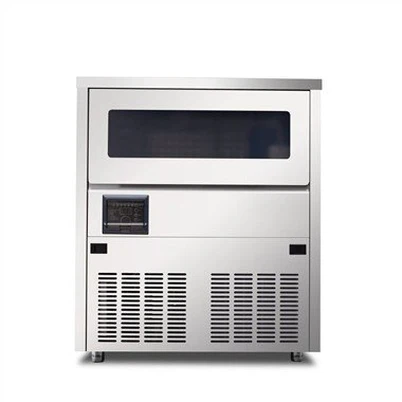
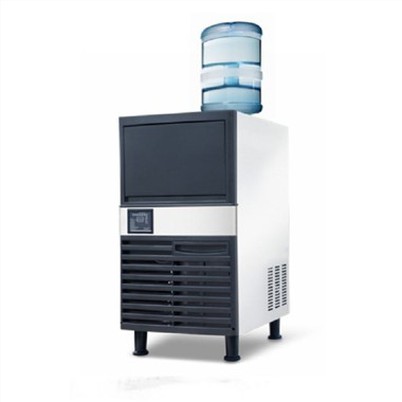
Let's Take A Look At The Impact Of Ambient Temperature On The Use Of Laboratory Snowflake Ice Machines
Leave a message
The laboratory snowflake ice machine is mainly used to provide an ice bath environment for samples when carrying out life science related experiments, so as to prevent samples (such as nucleic acids, proteins) from being degraded or deteriorated due to temperature changes, so as to ensure the accuracy and quality of experimental results. effectiveness.
The main body of the laboratory snowflake ice machine is divided into two chambers, the outer chamber and the inner disk are copper tubes of a certain density! The technical term is called (evaporation chamber), which is what is called refrigeration as the saying goes.
Inside the outer cavity is a very regular round stainless steel cavity. There is a three-leaf scraper in the center of the cavity and the distance from the inner wall can be adjusted by itself, generally 3 mm. There are several groups of evenly distributed copper nozzles above the skates!
When the laboratory snowflake ice machine is turned on, the plunger pump will pass the water mixed with salt through several filters to evenly spray 0.2 kg of water to the surface of the inner cavity, and then the cooling surface of the outer cavity will instantly form a 3 mm thick ice surface Under the action of the rotating ice blade, the freshly made ice is broken into small pieces and dropped into the storage bin! The principle of civilian ice machines is basically the same! The inner chamber is a rotating ice cube box.
Let's take a look at the impact of the ambient temperature on the use of the laboratory snowflake ice machine:
1. When the ambient temperature and the initial water temperature are constant, the longer the ice-making time, the thicker the ice layer, and the lower the initial water temperature, the shorter the ice-making time required to achieve the same ice thickness.
2. The ambient temperature seriously affects the ice-forming effect of the ice maker. When the initial water temperature is the same, the higher the ambient temperature, the higher the temperature of the outer tube wall of the icicle during the ice-making process, and the ice-making time increases with the increase of the ambient temperature. While increasing, the thickness of the finished ice decreases and the quality decreases.
3. The results of the numerical simulation of the icing process are basically consistent with the results of the experimental test. The relative error between the two is within 3%, which shows that the established mathematical model and calculation method are feasible. This research method can be used for small households. The design and performance optimization of the ice machine provide the necessary theoretical basis.