Analysis Of The Advantages And Disadvantages Of The Food Freezing Process Of The Flake Ice Machine And Other Processes
Leave a message
Freezing and cooling are very important steps in the food production and distribution process. Undoubtedly, as the food industry's demand for freezing and cooling continues to grow in the future, more and more food processors will upgrade or expand their freezing and cooling production lines. However, such enhancements and expansions are not as simple as before. At present, the development of food freezing technology is changing with each passing day. Although traditional mechanical food freezing equipment is still widely used, they are being replaced by many more advantageous new food freezing equipment and technologies. The latest technology of flake ice machine freezing technology is leading the market.
Today's food freezing processes can be grouped into three broad categories:
1. Mechanical food freezing equipment uses a closed circulation system of refrigerant to indirectly reduce the temperature of food through heat exchange between air and food.
2. Ultra-low temperature food freezing equipment reduces the temperature of food through direct contact with liquid nitrogen (-196°C) or carbon dioxide.
3. Impact food freezing equipment directly impacts food through high-speed jet airflow.
The above three food freezing process categories, various system designs including tunnel, spiral, IQF and fluidized bed are applicable. Among them, the most optimal equipment system depends on a series of factors such as food type and size, target production capacity, and factory space layout. These three types of food freezing processes and their system devices have their own advantages and disadvantages. Only when food processors carefully analyze their unique environment and requirements can they find the best solution according to local conditions.
If food processors only continue to process a single variety at high speed, mechanical food freezing can be in a stable process state. Of course, this needs to rely on sufficient site space, capital investment and qualified human resources. These processes should be as simple and quick as possible to maximize equipment uptime and optimize line performance. For example, increasing moisture or frost on the evaporator in mechanical food freezing equipment may delay processing time and reduce production capacity. Although standard hygiene cleaning procedures are necessary for the entire food industry, the impact on production capacity must be minimal. Food freezing equipment with small size and simple design cleans faster and costs less. The fewer complex components inside the equipment, the lower the height and the easier the access, the shorter the cleaning time and the higher the efficiency.
Although mechanical food freezing equipment has a fixed maximum capacity for any specific product, typical ultra-low temperature and impact type food freezing equipment can quickly adjust to meet the requirements of capacity changes by increasing the length of the tunnel. It is important to note that ultra-low temperature food freezing equipment is usually leased, so such changes in capacity requirements will not cause food processors to significantly increase their additional capital investment.
Because the mechanical impact food freezing process is only suitable for flat foods with a thickness of no more than 20mm, it has lower capacity flexibility than traditional mechanical methods. Ultra-low temperature and traditional mechanical food freezing equipment are more adaptable to thicker or irregular products.
The advantage of the ultra-low temperature food freezing system is that it can adapt to a series of freezing rate requirements of various types of food to improve its product quality. Of course, the advantages of low capital investment, flexible production, and easy cleaning are also attractive to many food processors today. Mechanical food freezing systems require a significant capital investment, but may pay off financially in the long run. The impact food freezing process actually closes the gap between mechanical and ultra-low temperature food freezing processes to some extent, but it can show limited advantages for specific food types. Food processors are advised to work with key food freezing system suppliers to determine the best food freezing process for their needs; and the best equipment setup for their production line.
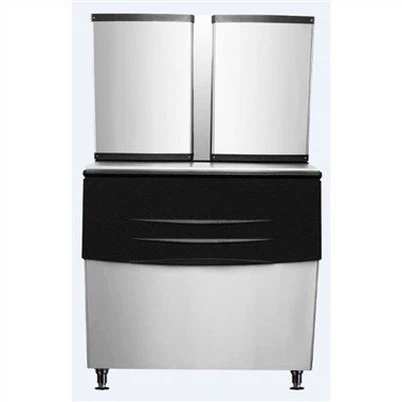
In a comprehensive comparison, different freezing processes have their advantages as well as their disadvantages. The evaporator of the flake ice machine is a vertically erected bucket structure, which is composed of ice blades, a main shaft, a water separator, and a water baffle, which are the main components of ice making. Driven by the reducer, they slowly rotate counterclockwise. Water enters the water distribution tray from the water inlet of the evaporator of the flake ice machine, and through the sprinkler pipe, the water is evenly sprinkled on the inner wall of the evaporator to form a water film; the water film exchanges heat with the refrigerant in the flow channel of the evaporator, and the temperature drops rapidly. A thin layer of ice is formed on the inner wall of the evaporator, and under the extrusion of the ice blade, it breaks into pieces of ice and falls into the ice storage through the water outlet. Part of the unfrozen water flows back into the cold water tank from the water return port through the water baffle, and enters the next cycle through the cold water circulation pump.