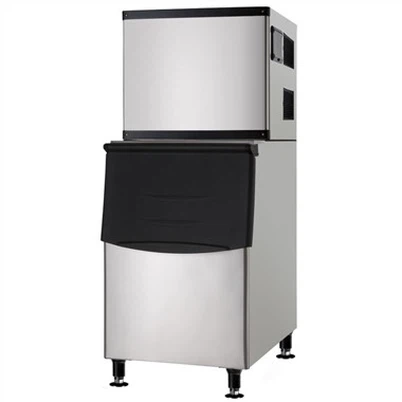
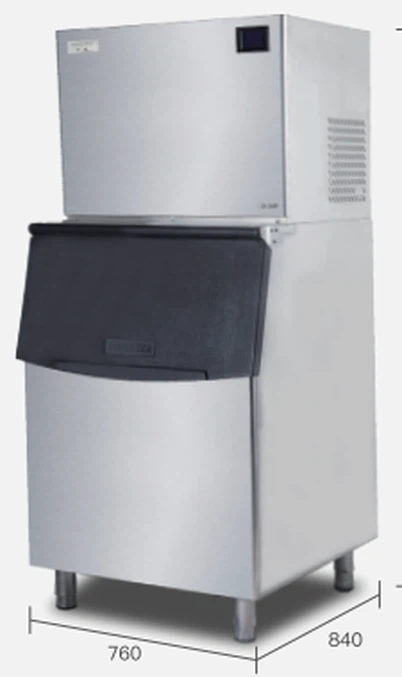
Let's take a look at the working principle of the ice machine and the ice making process
Leave a message
Let's take a look at the working principle of the ice machine and the ice making process
The ice machine is a kind of equipment that adopts a refrigeration system, uses water as a carrier, and passes through a certain equipment in an electrified state to produce ice. Today, let's all take a look at what the principle of the ice maker is. Through the supplementary water valve, the water automatically enters a water storage tank, and then through the flow control valve, the water is pumped to the splitter head, where the water is evenly sprayed on the surface of the ice maker and flows through the ice maker like a water curtain. The water is cooled to the freezing point, and the water that has not been evaporated and frozen will flow into the water storage tank through the porous grooves, and the cycle work will start again.
When the ice reaches the required thickness, the hot air discharged from the compressor is reintroduced into the wall of the ice maker to replace the low-temperature liquid refrigerant. In this way, a film of water is formed between the ice and the wall of the evaporation tube, and this film of water will act as a lubricant when the ice falls freely into the groove below by gravity. The water generated during the ice harvesting cycle will return to the water storage tank through the porous groove, which also prevents the wet ice from being discharged by the machine.
1. The working principle of the ice machine
1. The chilled water in the water storage tank is continuously circulated through the plate or grid evaporator by the water pump;
2. After the compressor is running, it is condensed (liquefied) through suction, compression, and exhaust - throttling - and then evaporates in the evaporator at a low temperature of -10 to 18 degrees to absorb heat and vaporize. Frozen water continuously condenses into an ice layer on the surface of the lower temperature evaporator at a water temperature of 0 degrees. When the ice layer condenses to a certain thickness and the evaporation temperature of the refrigerant reaches the set temperature of the temperature control, the defrosting solenoid valve is turned on, and the heat pump is usually used for deicing to realize the next cycle.
2. Ice making process
Through the water inlet valve, water automatically enters a water storage tank, and then pumps water to the shunt pipe. The shunt pipe evenly flows the water to the evaporator cooled by the low-temperature liquid refrigerant, and the water is cooled to freezing point. The water will freeze into ice, and the water that has not been frozen by the evaporator will flow into the water storage tank again, and the circulation will start again through the water pump.
When the ice cube reaches the required thickness, it enters the deicing state, and the high-pressure hot gas discharged from the compressor is diverted to the evaporator through the reversing valve to replace the low-temperature liquid refrigerant. In this way, a layer of water film is formed between the ice cube and the evaporator, and this layer of water film makes the ice cube break away from the evaporator, and when the ice cube falls freely into the ice storage tank below by the effect of gravity.
The high-temperature and high-pressure refrigerant gas enters the shell side of the condenser from the air inlet above the condenser, and the cooling water pump pumps the cooling water out of the water storage tank of the cooling tower, and enters the condenser through the water inlet below the right side of the condenser. In the tube side, it exchanges heat with the refrigerant outside the copper tube of the condenser, and the temperature rises. It comes out from the water outlet on the upper right side of the condenser, passes through the water outlet pipe, enters the water inlet pipe of the cooling tower, and then is sprayed by the sprinkler pipe. The water outlet is evenly sprinkled on the filler, and the fan sucks air to exchange heat with the water in the filler to reduce the water temperature, and the cooled water is stored in the water storage tank for repeated use.
The high-temperature and high-pressure refrigerant gas exchanges heat with the cooling water flowing in the tube side in the shell side of the condenser, the temperature drops, and condenses into liquid. The heat removal of the refrigeration unit: first conduct heat exchange with water (heat exchange in condensation), and then conduct heat exchange with air (heat exchange in cooling tower).